




The real estate industry is undergoing one of its most consequential transformations in decades. Driven by climate urgency, tightening regulations, and shifting investor priorities, sustainability is no longer a niche consideration — it is fast becoming the baseline standard for how buildings are designed, financed, and managed.
What Does Sustainable Real Estate Actually Mean?
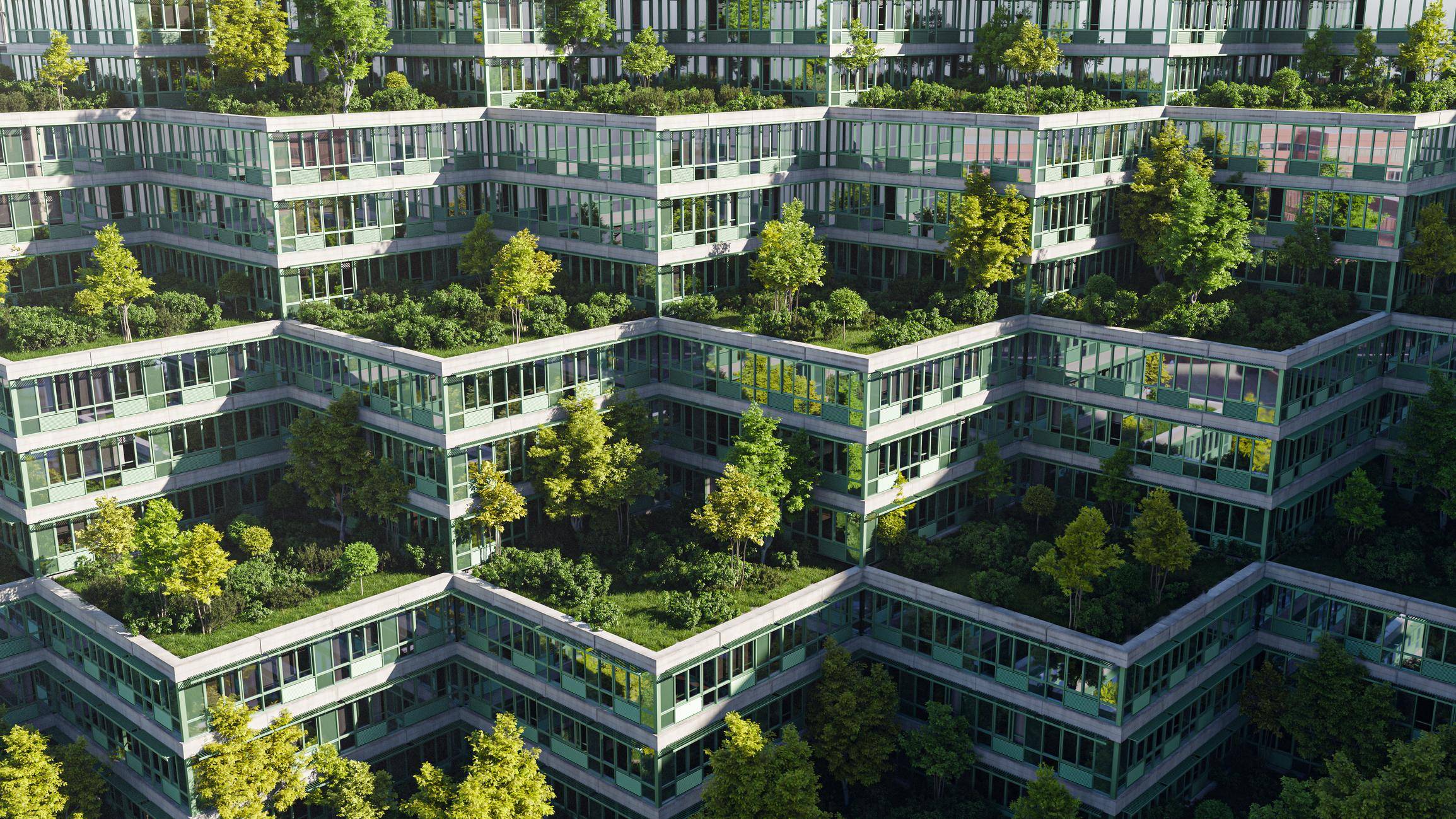
Sustainable real estate involves the development, construction, and management of properties with a focus on efficiently using resources, reducing exposure to climate risk, and minimizing negative environmental impact. This spans everything from energy-efficient HVAC systems and green roofs to rainwater harvesting, low-carbon building materials, and resilient designs that can withstand extreme weather events. Equally important are social dimensions — access to public transportation, mixed-use properties that support local communities, and healthier indoor environments for occupants.
The Financial Case Is Now Undeniable
For years, green building was dismissed as a cost burden. Today, that argument no longer holds. Certified green buildings cut utility costs by 25–30% on average, with high-efficiency builds reducing energy consumption by as much as 40–50%. According to the World Green Building Council, these savings translate to 14–30% lower operating costs annually. While a green development may cost 6–7% more upfront, it typically delivers a 10–15% return on investment over time, with capital recovery often achieved within one to five years.
The rental premium is equally compelling. LEED-certified and BREEAM-compliant office buildings command rent premiums of 13–36%, depending on market and location. ESG-focused tenants prefer these spaces, leading to longer lease durations, fewer vacancies, and more stable cash flows. The global green building market, valued at USD 683 billion in 2024, is forecast to surpass USD 1.4 trillion by 2032, growing at nearly 10% annually.
The Trends Defining 2026
Several forces are converging to accelerate this shift. Net-zero energy buildings (NZEBs) — structures that generate as much energy as they consume — are moving from aspirational to achievable, driven by advances in solar, geothermal, and battery storage technology. Meanwhile, AI and IoT are enabling predictive energy management systems that adjust heating, cooling, and lighting in real time, with one McKinsey study projecting a 12% reduction in global household emissions from smart home technology by 2030.
On the regulatory front, 2026 represents a turning point. The EU’s Corporate Sustainability Reporting Directive (CSRD) has broadened mandatory ESG reporting obligations for real estate owners and funds, while updated versions of LEED v5 and BREEAM v7 now require stronger alignment with decarbonization goals and life-cycle assessment approaches. Governments worldwide are mandating NZEB compliance for new constructions, and local laws like New York City’s Local Law 97 are placing binding emissions caps on large buildings.
A Strategic Imperative, Not Just an Ethical Choice
Climate change is also reshaping risk. Commercial real estate insurance costs are rising rapidly in areas exposed to wildfires, flooding, and extreme heat — making resilient, sustainable design a financial hedge, not just a moral stance. As J.P. Morgan’s Global Head of Climate Advisory noted, “Rising physical risk from climate change is creating a new wave of interest in sustainable design”.
For developers, investors, and property managers, the message is clear: sustainability is not a cost to minimize — it is a value driver to maximize. The buildings that will define the next decade are those being built green today.